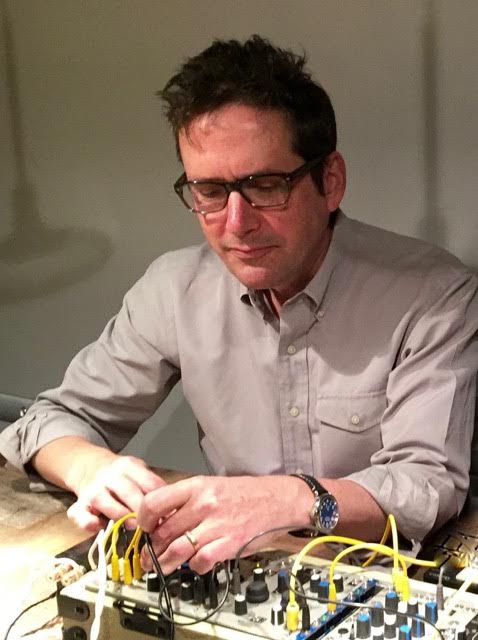
 Tom Erbe is deeply involved and dedicated to electronic and computer music research, and creation. He creates computer music software and hardware, most notably the sound processing application SoundHack, the many soundhack plugins, and several ground-breaking synthesis modules developed with Make Noise Music. Tom Erbe has performed, and collaborated on, electronic music pieces by Alvin Lucier, John Cage, James Tenney, Maryanne Amacher, Larry Polansky, Alvin Curran, Robert Ashley, Clipping, and others. As a recording engineer, Tom Erbe has produced over 100 CDs of contemporary music, including the restoration of James Tenney’s early computer music, recording of Bridge Records’ Morton Feldman series, compilation of the Lyrachord series of contemporary Indonesian music, and production of over 20 years of the Leonardo Music Journal‘s annual compilation of experimental music.
Notable Work
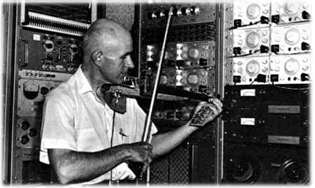 Developed (with Andy Voelkel) a real-time pitch detector and performance system for Max Mathews’ electronic violin for János Négysey (1986)
- Developed the first CD quality (16-bit) audio interface for the Macintosh with Micro Technology Unlimited. (1987)
- Performed electronics and “rhythm orchestra” on Robert Ashley’s ground-breaking opera Improvement. (1989)
- Created SoundHack, a spectral sound processing application for the Macintosh,
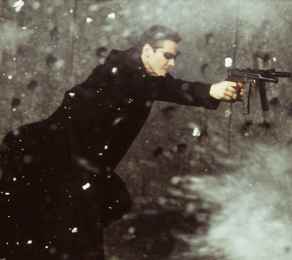 one of the first freeware computer music programs, and winner of first prize at the first Concours de Logiciels Musicaux at the IMEB Festival in Bourges. SoundHack is used extensively for the sound design for The Matrix, which wins the Academy Award in sound design. This software is still widely used today. (1991)
 - Developed and built the NASA Ames Auditory Display Processor, a four-channel binaural processor designed to improve communication intelligibility for NASA launch and mission control. (1992)
- Designed and supervised the installation of the Dizzy Gillespie Recording Studio at California Institute of the Arts. (1998)
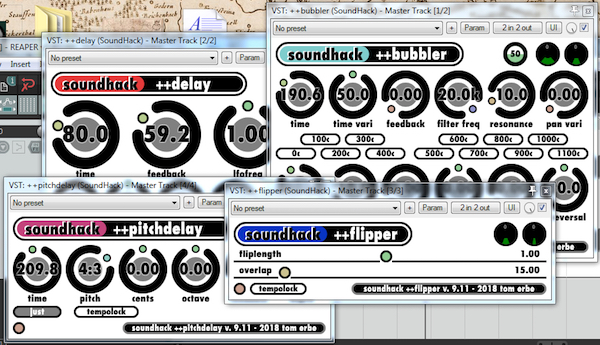
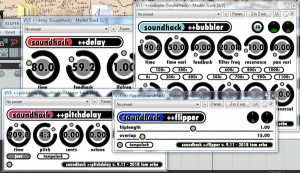 Developed 17 sound processing plugins to use in all areas of sound design.
These include Spectral Shapers, freesound, delay trio, and Pvoc Kit. (1999 – 2018)- Audio archivist for the David Tudor archive at the Getty Research Institute. Reformatted over 300 tapes of David Tudor’s electronic music, as well as related material from the Experiments in Arts and Technology (EAT). (2000-2002)
- Redesigned and supervised installation of all studio and concert-hall audio electronics for the Conrad Prebys Music Center at UC San Diego. (2008)
- Recreated and performed John Cage’s Williams Mix. This was the first and only new interpretation of Cage’s pioneering work since Cage and friends assembled the piece in 1952. A separate realization was created for noise hip-hop band Clipping. (2012-14)
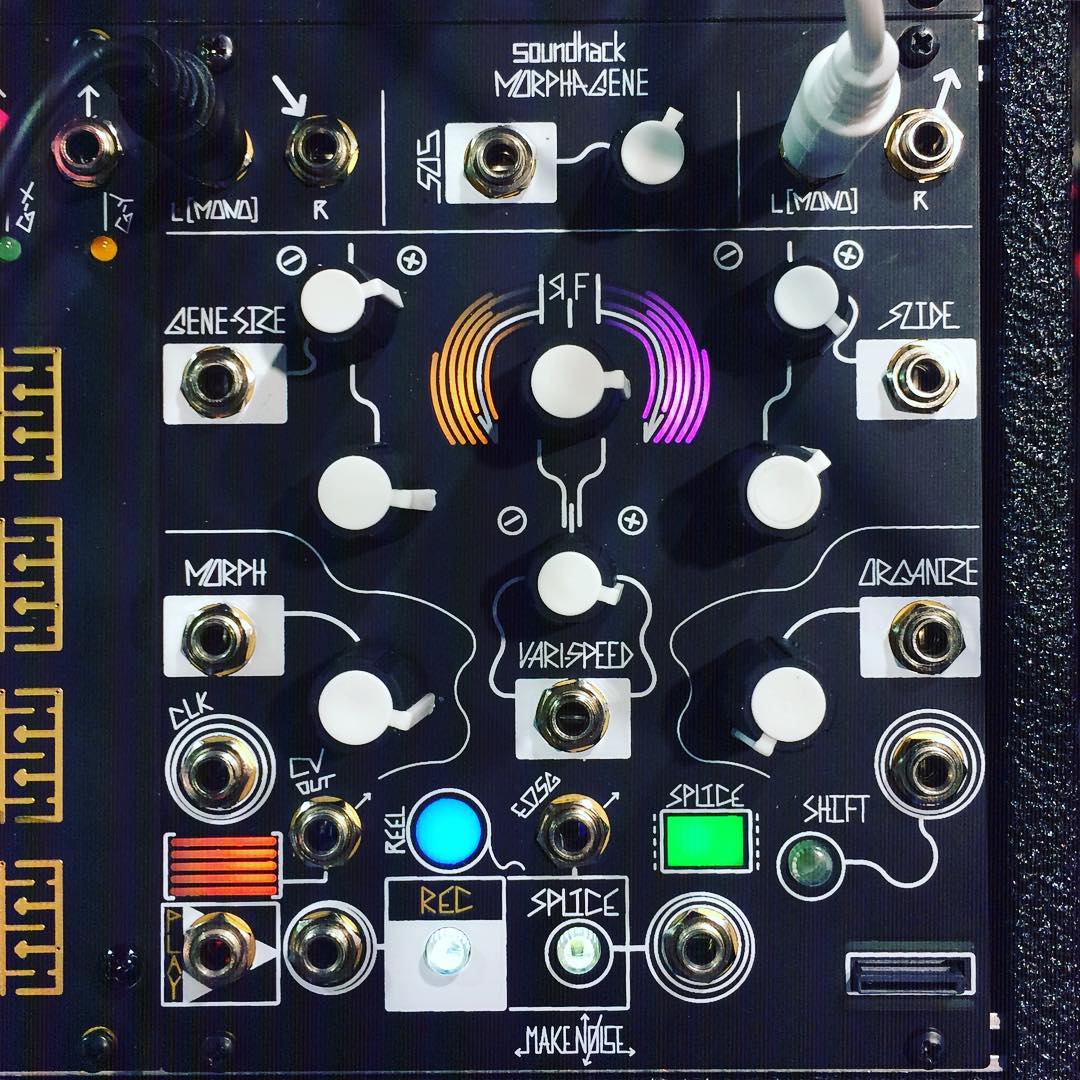
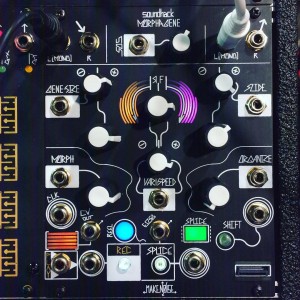 Created several synthesis modules in collaboration with Make Noise Music.
These include: Echophon, Telharmonic, Erbe-Verb and Morphagene. Echophon won the Electronic Musician Editors Choice award in 2013, and Erbe-Verb won the Electronic Musician Editors Choice award in 2015. (2012-2018)